

The conversation usually starts with imports. According to SBI Research, India’s gold import bill rose from $57.9 billion in FY25 to an all-time high of $72.4 billion in FY26, driven almost entirely by rising global prices rather than growing demand. In fact, import volumes actually declined by nearly 5% in the same period. India spent more dollars for less gold. That gap between value and volume tells a story about price dependency that economists have been warning about for years.
But the other half of that story rarely makes headlines.
Indian households are estimated to hold approximately 25,000 tonnes of gold — one of the largest concentrations of privately held gold anywhere on the planet. This gold sits in bank lockers, in steel almirahs, in ancestral cupboards, in velvet boxes tucked into the backs of wardrobes. It is rarely worn. It is rarely used. And for most families, it is rarely thought of as something that could be activated.
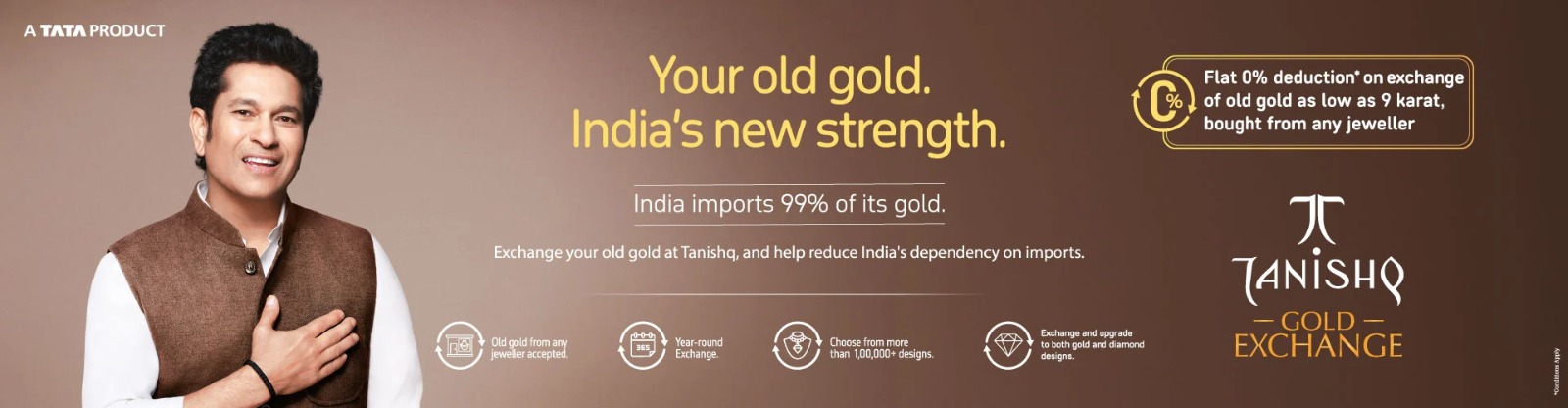
The contradiction is striking: a country that imports gold at record values while sitting on an enormous domestic reserve of the same metal. And increasingly, that contradiction is prompting a shift in how both consumers and organised jewellers think about gold exchange.
The Old Model of Gold Exchange — and Why It Didn’t Work
For decades, exchanging old gold at a jewellery store in India was an exercise in anxiety.
The process was opaque. A customer would bring in a piece — perhaps a chain inherited from a grandmother, or a set of bangles bought at a different jeweller years ago — and hand it over. What happened next was largely invisible. The gold would disappear behind a counter. A number would be offered. The customer had no way of verifying the purity assessment, no visibility into the weighing process, and no way of knowing whether the deductions being applied were fair or arbitrary.
Hidden deductions were common. Many jewellers applied charges for “wastage” or “melting” that were not disclosed upfront. Purity was frequently tested using the touchstone method, which is operator-dependent, subjective, and not consistently accurate. Bills were often required for exchange — which excluded a large proportion of the inherited or gifted gold that Indian families actually hold. And for gold purchased from a different jeweller, the valuation was often suppressed, with exchange rates favouring the jeweller rather than the customer.
The result was a deep, persistent consumer scepticism about gold exchange. Families knew their old jewellery had value. But they didn’t trust the process enough to use it.
The Tanishq Approach: Process as the Product
What Tanishq has done differently is not simply offer a better rate. It has redesigned the process itself to make transparency the central product feature.
The exchange process at Tanishq stores follows a specific, visible sequence:
Step 1 — Weighing: The customer’s old gold is weighed in front of them. Gold weight and stone weight are measured separately. There is no pooling, no estimation.
Step 2 — Purity Testing via Karatmeter: Tanishq uses a device called the Karatmeter — an X-ray fluorescence (XRF) spectrometer — to assess gold purity. The Karatmeter is a non-destructive testing method: it does not scratch, acid-treat, or alter the gold. It delivers an accurate purity reading in seconds, and the reading is shown to the customer. The technology was pioneered by the Tata Group and has since become a standard reference point for gold purity verification in the Indian market.
Step 3 — Melting, Behind Glass: The tested gold is then melted by a master karigar within the store itself. This melting happens behind a glass wall — visible to the customer throughout the process. There are no backrooms. The gold never leaves the customer’s sight.
Step 4 — Valuation: Once melted, the ingot is reweighed and the exchange value is calculated at the current buying rate. Crucially, at Tanishq, the buying rate and selling rate are the same. There is no spread applied against the customer.
Step 5 — Full Breakup: The customer receives a complete transaction breakup. No hidden processing fee. No surprise deduction.
This five-step process is consistent across Tanishq’s network of over 500 stores across more than 300 cities in India.
What Tanishq Accepts — and What It Doesn’t Charge For
One of the most significant features of Tanishq’s exchange policy is its breadth of acceptance.
Old gold from any jeweller in India is accepted — not just Tanishq pieces. There is no bill or purchase receipt required. Gold in any condition is accepted — broken chains, mismatched earrings, bent bangles, tangled necklaces. And the policy covers gold across karatages starting from 9KT all the way through 22KT.
This last point matters more than it might initially appear. A significant portion of gold jewellery circulating in Indian households predates the widespread adoption of hallmarking standards. Much of it sits at purities below 22KT — including 18KT, 14KT, and lower. Until Tanishq expanded its exchange policy to include these lower karatages, this gold was effectively stranded. Customers were told it wasn’t worth exchanging, or were offered negligible value for it.
By accepting gold from 9KT upward, Tanishq has unlocked a category of exchange that most organised jewellers have historically ignored.
The Numbers: What the Programme Has Achieved
The scale of Tanishq’s gold exchange programme is documented:
Over 30 lakh customers across India have exchanged old gold through Tanishq’s programme since its inception. The total volume of gold recycled through the programme stands at nearly 1.7 lakh kilograms. Exchange transactions now contribute approximately 40% of Tanishq’s overall business, according to statements made by Ajoy Chawla, CEO of the Jewellery Division at Titan Company Limited.
In the reference article, the CEO also noted that in the last one year alone, over 14,000 kilograms of gold has been brought back into circulation through the programme.
These are not marketing projections. They represent a measurable reintroduction of previously idle household gold into the active economy.
Every hour, according to Tanishq’s own exchange portal, more than 100 Indians join the brand’s exchange community to upgrade their old gold.
The Bigger Picture: Gold Exchange and India’s Import Dependence
The economic significance of organised gold exchange extends well beyond the retail transaction.
India’s gold import dependence is structural. Despite new gold deposit discoveries in states including Odisha, Madhya Pradesh, and Andhra Pradesh, import dependency stood at approximately 86% of domestic gold supply in 2024, according to World Gold Council data cited in SBI Research. Gold has, at various points in recent years, accounted for between 5% and 10% of India’s total import bill — a significant contributor to the merchandise trade deficit.
Household gold — estimated at 25,000 tonnes — represents a domestic resource of extraordinary scale. Every kilogram of that gold that re-enters circulation through exchange is a kilogram that does not need to be imported. The logic is straightforward: if even a fraction of idle household gold were regularly recycled through organised exchange, the incremental pressure on gold imports could be meaningfully reduced over time.
This is the framing that Tanishq has explicitly adopted in its “Your Old Gold. India’s New Strength” campaign, launched with brand ambassador Sachin Tendulkar. The campaign — which ran ahead of gold imports becoming part of mainstream national economic discussion — positioned exchange not as a transactional retail offer, but as participation in a broader national objective.
Ajoy Chawla, CEO of the Jewellery Division at Titan Company Limited, articulated it this way: “Every time a family exchanges even one gram of old locker gold, they not only unlock value for themselves but also contribute to the nation by reducing imports. That is the power of gold exchange — personal joy with a national impact.”
Sachin Tendulkar, speaking on his association with the campaign, said: “Gold is woven into the lives of every Indian family — gifted, cherished, and relied upon as it is passed on with love through generations. Tanishq’s Gold Exchange offers families a transparent and trustworthy way to renew this legacy.”
Why Transparency Is the Central Innovation
It would be easy to frame Tanishq’s exchange programme as primarily a pricing story. It isn’t.
The more important innovation is procedural. The glass-wall karigar room. The Karatmeter reading shown to the customer. The separation of gold weight from stone weight. The itemised receipt. The elimination of the bill requirement.
Each of these design choices addresses a specific historical barrier to consumer participation in gold exchange.
The glass wall addresses the anxiety of the invisible process. The Karatmeter addresses the subjectivity of traditional purity testing. The separation of weights addresses the opacity of bundled valuation. The bill-free policy addresses the exclusion of inherited and gifted gold. The itemised receipt addresses the opacity of deductions.
Taken together, they constitute a systematic deconstruction of the reasons Indian consumers avoided organised gold exchange — and a systematic replacement of each barrier with a visible, verifiable alternative.
This is what distinguishes Tanishq’s programme from exchange offers that are primarily promotional. An offer can be withdrawn. A process redesign, embedded in store infrastructure and staff training across 500+ locations, represents a structural commitment.
The Karatmeter: A Note on the Technology
The Karatmeter deserves a dedicated explanation because it is central to understanding why Tanishq’s purity assessment is considered reliable.
Traditional gold purity testing methods — the touchstone method, acid testing, fire assay — all involve some degree of operator subjectivity, or are destructive to the gold being tested. The touchstone method’s accuracy depends on the quality of the touchstone, the acid used, lighting conditions, and the operator’s experience. Acid testing, while more reliable, is mildly destructive. Fire assay is the most accurate method but is impractical for retail environments.
XRF spectrometry — which the Karatmeter uses — works by directing X-rays at the gold. The gold’s atoms emit secondary fluorescent X-rays at energies characteristic of the specific elements present. The device reads these emissions and calculates the exact elemental composition of the alloy, producing an accurate karat value without touching or altering the metal. The reading is immediate, repeatable, and operator-independent.
The Karatmeter was introduced to the Indian jewellery retail market by Tata, through Tanishq, and has since been adopted as an industry reference for purity verification. Its use in Tanishq’s exchange process means that the purity assessment given to every customer is based on the same technology used in professional hallmarking certification.
What This Means for the Consumer
For a family approaching gold exchange for the first time, the practical implications of Tanishq’s process design are significant.
No bill required. Jewellery received as gifts, inherited from relatives, or purchased decades before digital records existed does not need documentation to be exchanged.
Any jeweller, any condition. Old gold does not need to have been purchased from Tanishq. It does not need to be in wearable condition. Broken pieces, mismatched sets, and damaged jewellery are all accepted and fully valued.
Full purity visibility. The Karatmeter reading is shared with the customer. There is no estimate, no approximation. The karat value used to calculate exchange value is the same karat value the machine reads.
No processing deduction. The exchange value is the net gold value, calculated at the current rate, without a processing fee subtracted from the final amount.
Complete transaction record. Every exchange produces a full itemised receipt showing weight, purity, rate, and final value — a record the customer keeps.
Choice across a large catalogue. Exchange value at Tanishq can be applied toward any purchase across the brand’s range — which includes gold jewellery, diamond jewellery, gemstone jewellery, and pieces across sub-brands including Mia and Zoya.
Exchange-Led Buying: A Changing Consumer Behaviour
The growth of Tanishq’s exchange programme reflects a broader shift in how Indian consumers approach jewellery purchasing — particularly as gold prices have risen sharply.
With 24-karat gold prices surging globally through 2025 (touching record highs), many families found fresh gold purchases increasingly difficult to budget for. Exchange-led buying offers a practical alternative: instead of funding a purchase entirely in cash, the family leverages the gold they already own as the primary currency.
This behavioural shift — away from purely incremental gold accumulation toward active recycling of existing gold — has implications not just for jewellery retail but for how India’s domestic gold stock is treated as an economic resource.
The fact that exchange now contributes 40% of Tanishq’s business at scale suggests this is not a niche behaviour. It is increasingly the mainstream mode of jewellery purchasing for a significant proportion of Indian consumers.
The Role of Organised Retail in Building Trust at Scale
India’s jewellery sector remains heavily fragmented, with a large proportion of purchases still occurring through local and unorganised jewellers. The barriers that have historically limited gold exchange — opaque purity testing, unstandardised deductions, the requirement for bills — are most acute in the unorganised sector.
The growth of organised gold exchange at scale, through a brand with Tanishq’s network size and the Tata Group’s institutional credibility, has a market-wide effect: it raises the consumer’s expectation of what a gold exchange should look like. A customer who has experienced transparent, documented, Karatmeter-verified exchange at Tanishq carries a new reference point for what is normal — and what is not.
This is how trust builds at scale in a fragmented market. Not through regulation alone, but through the demonstration, at high volume, of a better process.
Conclusion: Old Gold, New Purpose
India’s gold story has always been told in terms of accumulation. Families buy gold. They store gold. They inherit gold. The gold grows in emotional value and sits.
What Tanishq’s exchange programme represents, at its most fundamental level, is an argument for a different relationship with that gold. Not accumulation as an end in itself, but gold as a living asset — one that can be tested, valued, recycled, and transformed without loss, in a process the customer watches from start to finish.
More than 30 lakh Indians have already made that choice. Nearly 1.7 lakh kilograms of gold have re-entered circulation as a result.
The gold in India’s lockers has always had value. Tanishq’s exchange programme is, above all else, a system for making that value visible — and usable.
Tanishq is a jewellery brand under Titan Company Limited, a part of the Tata Group. It operates over 500 stores across more than 300 cities in India.
